- Built by
- The emperor Zeno
- Period
- c. 473–490
- Plan
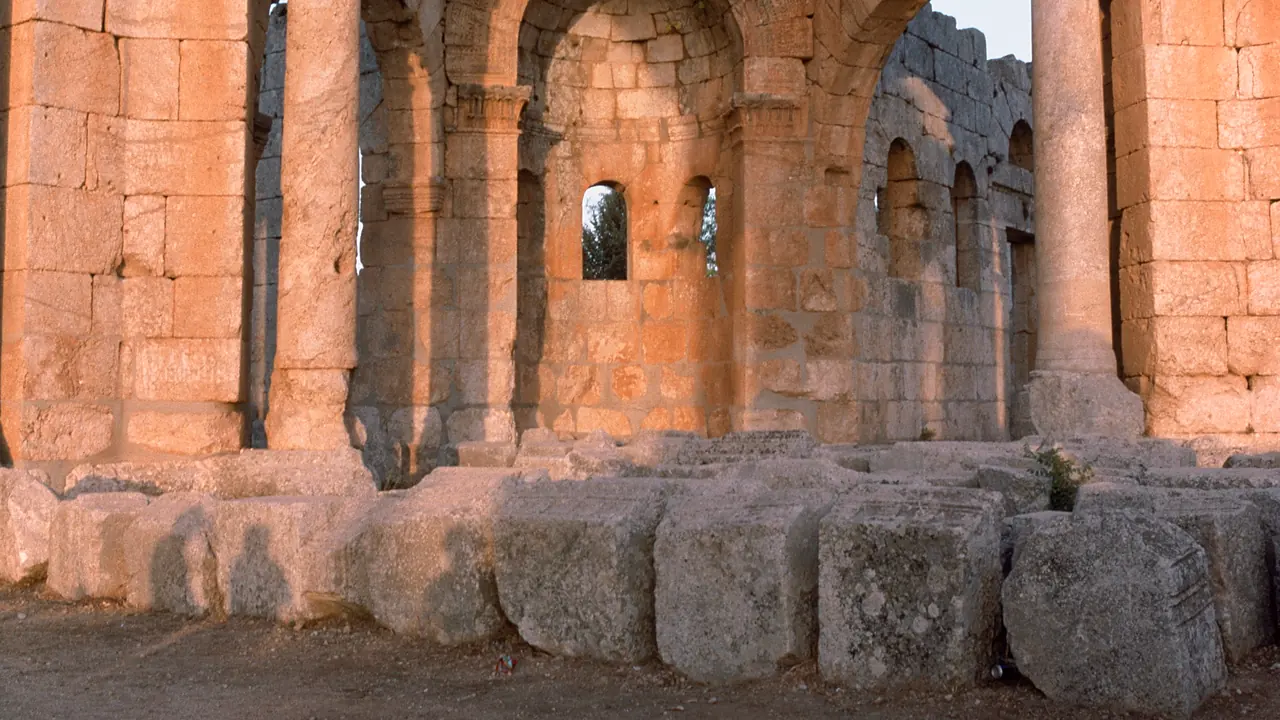
- Four basilicas on a central octagon
- Width
- to be confirmed
- Roofing
- Disputed — dome or open court
Provisional information. The highlighted values are placeholders awaiting the site survey and confirmation by the Directorate-General of Antiquities and Museums.
The problem the architects were handed was unusual: build a church around an object that cannot be moved, and let very large numbers of people see it.
Their answer was the octagon. An eight-sided court was raised over the column, and four basilicas were set against it in the shape of a cross — east, west, north and south — so that each opened onto the same central space. Instead of one congregation facing one altar, four halls of people faced inward at a single point. It is one of the most intelligent pieces of planning in late antique architecture, and it exists because of a man who refused to come down.
Whether the octagon was roofed with a timber dome or left open to the sky is still argued. The current state of the scholarship on the roofing, and what survives of the drum, are to be confirmed with DGAM.
What is not in dispute is the ambition. Taken together, the four basilicas and their octagon made the largest church in the Christian world, and it stayed the largest until Hagia Sophia was completed in Constantinople in 537.