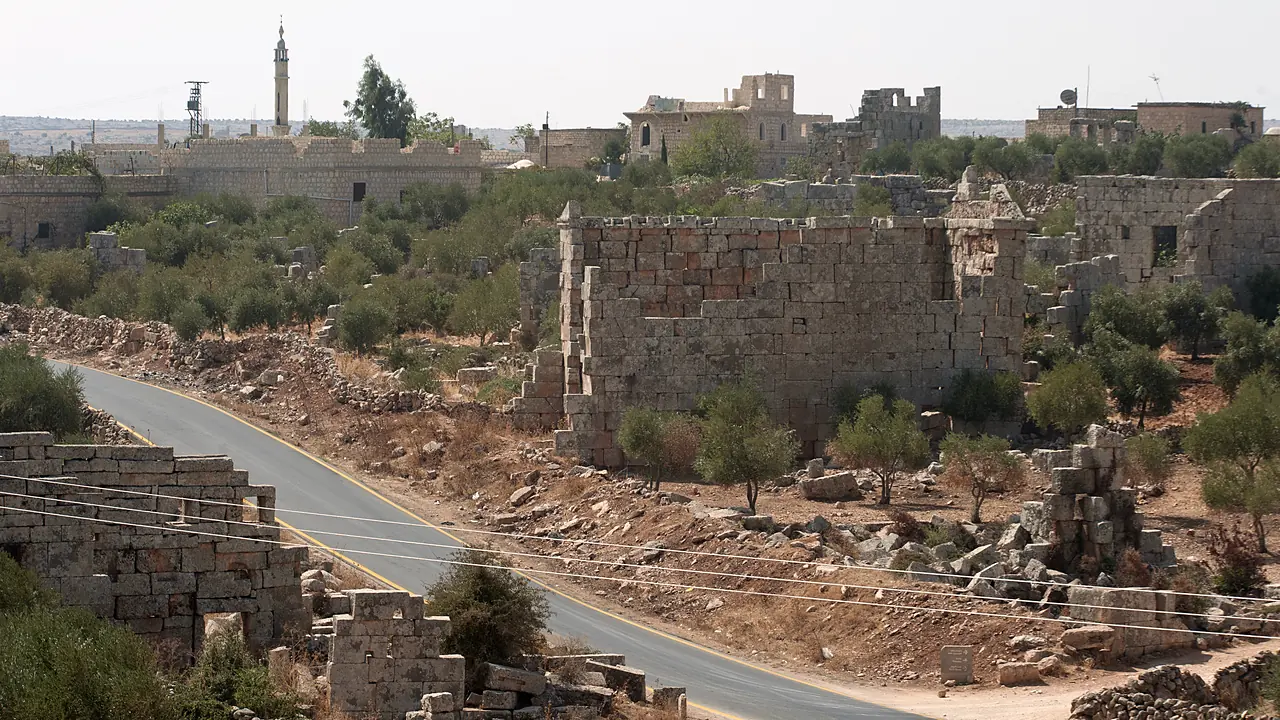
Before the hill there was a village, and the village is why the hill worked.
Telanissos was established in the middle of the fifth century at the foot of the climb, and it is where arrivals stopped. They came off the road, found lodging, slept, and went up in the morning along the Via Sacra. The buildings that did that work are still standing: monasteries, churches, and the hostels — pandocheia — that housed the traffic.
01Why it matters more than it looks
A shrine with a hostel problem is a shrine that has succeeded. The scale of the lodging at Deir Semaan is the hard evidence for how many people were actually coming, and it turns an abstract claim about pilgrimage into something you can walk through and count.
It is also the practical answer to the length of the drive. The hilltop alone is ninety minutes. The hilltop and the village together are a half-day, and the half-day is what makes leaving Aleppo worth doing.
02What is there
- Established
- Mid-5th century
- Was called
- Telanissos
- Monasteries
- number and identification to be confirmed
- Pilgrim hostels
- Standing; extent to be confirmed
- Walk to the summit
- Along the Via Sacra; time to be confirmed
The condition of the village buildings, what is accessible and what is fenced, and whether anything on site is signposted are to be recorded on the site survey.